Retreat
An Ebro Delta Birding Weekend With the Phone Put Away
Spend two nights around Encanyissada and Tancada with binoculars, paper notes and one charged emergency phone kept out of sight.
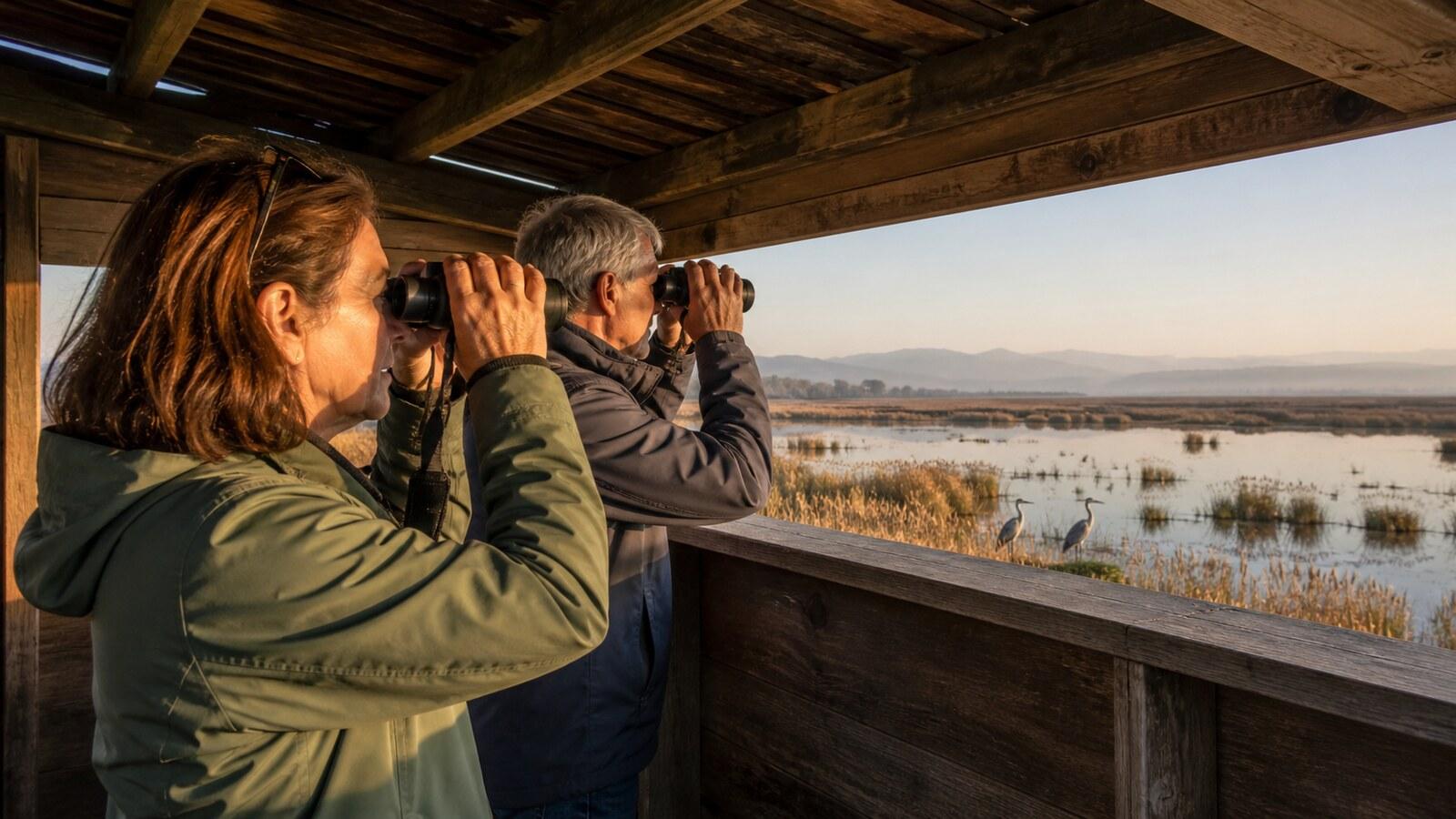
The Ebro Delta rewards staying still. A heron crosses a drainage channel, waders feed along a shallow edge and the sound in the reeds changes before a bird becomes visible. A screen-free weekend makes sense here because attention is the activity—not because the landscape is safe to enter without current information.
Use Poblenou del Delta or another staffed southern base for two nights. Keep one charged phone switched off but available for warnings and emergencies, carry a paper notebook and download the map before arrival. Offline should remove distraction, not weather awareness.
Arrive in daylight on Friday
Check the Ebro Delta Natural Park site for notices, then ask the accommodation about access and wind. Buy simple food, identify the first observation point and stop planning. A short sunset look near the base is enough after a long drive.
Compare a quiet Ebro Delta stay by distance to the chosen lagoon, heating or cooling, breakfast time and a check-in that does not depend on continuous messaging. An isolated house is not useful if darkness makes its final track hard to find.
Share the address and return time with someone. Pack binoculars, a field guide, water, sun and wind protection, insect repellent, muted clothing and a small torch. A telescope adds reach but is not required for a first slow weekend.
Give Saturday two observation windows
The park's official southern birding itinerary begins around Poblenou, L'Encanyissada and La Tancada and names observation towers and lagoon species. Use it as orientation, not a demand to complete every stop.
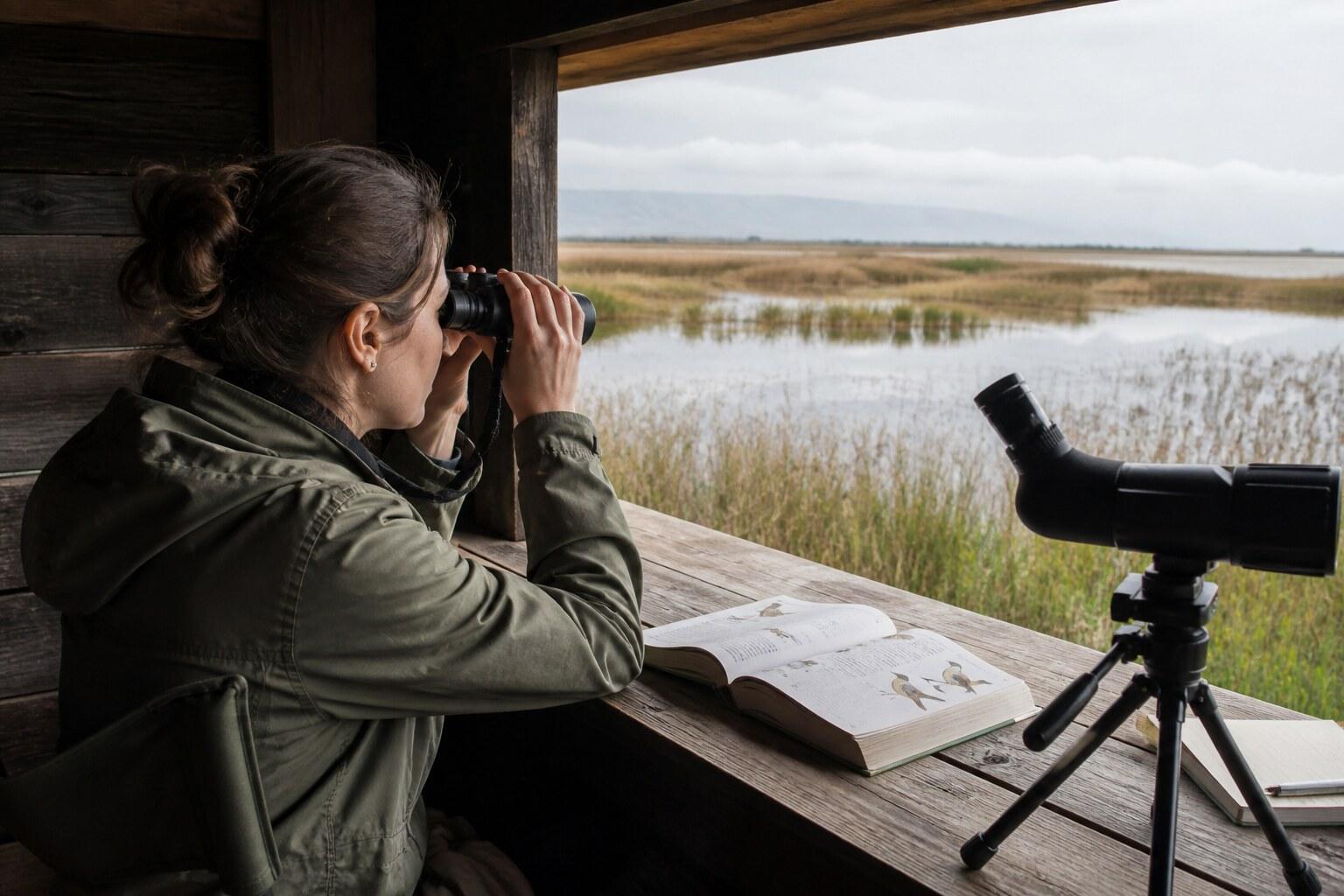
Choose L'Encanyissada at dawn. Settle at one permitted observation point and let the first hour unfold without checking identifications online. Write shape, behaviour, colour and sound in the notebook; the species name can wait.
Return for breakfast and rest through the brightest middle hours. Read, sleep or take a short village walk. In late afternoon, choose La Tancada or the nearest open hide. Narrow roads, tractors and pauses make the delta slower than its flat map implies, so one lagoon per light window is enough.
Never enter rice fields, nesting areas or a closed path for a closer photograph. Keep voices low in hides, give other observers room and avoid playing recorded calls. Wildlife does not owe the visitor a better angle.
Use the notebook as more than a species list. Mark the time, wind, water level, habitat and what the bird was doing. Sketch the proportion of bill, legs and body before opening the field guide. That slower record helps separate a real observation from the name you hoped to find, and it makes a later conversation with a local guide much more useful.
Keep a simple rule for shared hides: binoculars first, quiet description second, movement last. Point out a bird using fixed landscape markers rather than stepping in front of another observer. Families can give children one patch of water to watch instead of asking them to remain silent through an adult checklist.
Let Sunday remain small
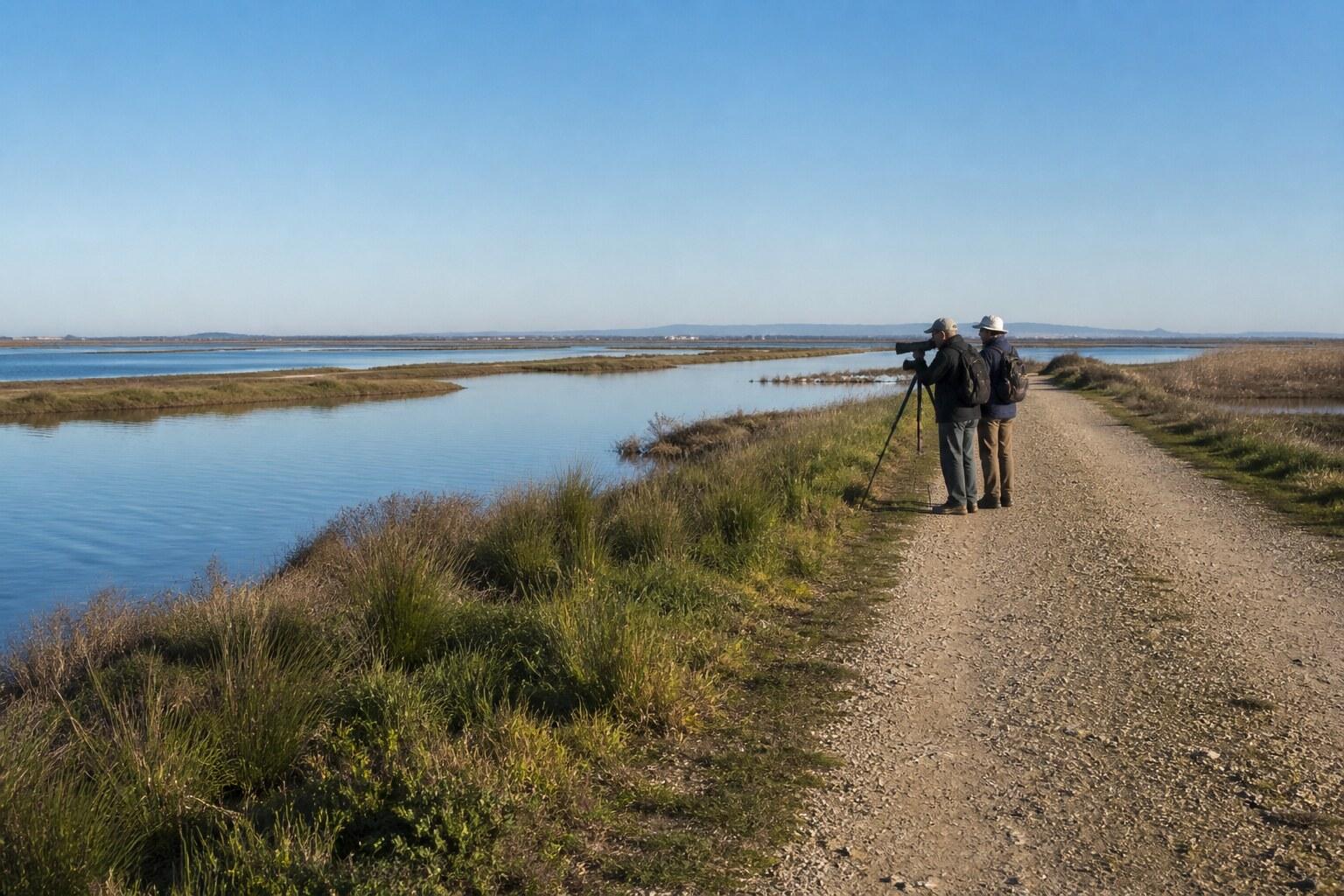
Return to the most rewarding accessible hide or choose one sheltered point recommended locally. Stop while concentration is still good, have lunch and leave before the drive becomes rushed. Two sightings remembered clearly are worth more than a long list assembled between notifications.
Strong wind can make exposed towers uncomfortable and cycling unsafe. Rain, access closures or sensitive breeding periods may remove a planned stop entirely. Casa de Fusta or another staffed, sheltered park facility can become the centre of the day when open; obey current guidance rather than a saved itinerary.
Allow roughly €160–380 per room for two nights as a broad planning range, plus meals, transport and any guide. A local birding guide is valuable when the objective is learning habitats and fieldcraft, but confirm group size, meeting place, optical equipment and cancellation conditions.
Before leaving, photograph the paper notes only if you want a backup; do not turn the final hour into a posting session. Review uncertain identifications later and accept that some birds remain unnamed. The useful part of the detox is discovering that identification, navigation and safety can be prepared while the actual watching remains quiet.
Reconfirm park notices, weather, lagoon access, accommodation and any guided meeting point before travel.
Related guides
- Vall de Bianya Phone-Free Farm Stay: A Two-Night Plan
A two-night Vall de Bianya retreat with one Romanesque walk, long meals and a phone-free agreement that preserves emergency contact.
- A Digital Detox in Catalonia That Does Not Become Another Project
Plan a quiet Catalan stay around realistic boundaries, one safe line of contact and days simple enough to leave unscheduled.
- Escaladei and Montsant: A Quiet Weekend Without a Wine Schedule
A two-night Montsant stay built around Escaladei charterhouse, one modest walk and long unclaimed hours instead of a chain of tastings.
Are you in the know?
Receive new articles, local updates, and occasional offers from selected partners. We never share your email address. Unsubscribe at any time.
By subscribing you agree to our privacy policy.